This week, the weekend arrives early. With 11 September — Catalonia's National Day, or Diada — falling on a Friday, the week's rhythm shifts, and the first of the three days takes on a meaning of its own. The Diada will once again bring events to the streets and to institutional buildings, but it will also open the doors of heritage sites and spaces where history becomes visible, while music takes to the streets to accompany the day.
After the Diada, though, two more days remain for the city's cultural calendar to keep unfolding. Time to change gears and let yourself be carried along by offerings ranging from the vivid painting of José María de Aurora, who opens Escat Gallery's new premises in L'Hospitalet de Llobregat, to the strains of jazz returning to Gràcia. There will even be time to head to Badalona in search of the best pizza, or to stretch the afternoon into evening among the vintage pieces at Mercantic in Sant Cugat del Vallès.
When the Diada is experienced through heritage...
11 September
Beyond the official ceremonies and demonstrations filling squares and streets, on 11 September various museums, palaces and historic buildings also use the Diada to open their doors free of charge, inviting us into spaces that, despite being part of the city's landscape and heritage, we usually only know from the outside.
Stepping into the Patio de los Naranjos and climbing the Gothic staircase of the Palau de la Generalitat, visiting the Parlament or losing yourself for a while among the collections of the Museu Nacional d'Art de Catalunya are just some of the free offerings for this 11 September. But the day will also bring the chance to discover other sites that form part of the city's heritage, from Palau Güell, with free entry and prior booking, to the Basílica de Santa Maria del Mar, with reduced-price tickets, or the Museu d'Arqueologia. There are even spaces in the city that let you relive the history behind the Diada, such as the 11 de septiembre tour in El Born, which brings back to life the settings of 1714 Barcelona and the stories of the families who lived through the siege first-hand.
...and also extends into music
11 September, 7pm, at Passeig de Lluís Companys
Beyond the open doors, out on the streets the Diada takes on another dimension: after the demonstration — organised by the ANC, Òmnium Cultural, the AMI, the Consell de la República, the Intersindical and CIEMEN, and split into two columns, one representing the present and one the future, setting off at 5.14pm from different points across Barcelona before converging on Plaça de Catalunya — the Diada will still have one last stop: Passeig de Lluís Companys.

It's there, beside the Arc de Triomf, that Òmnium Cultural is holding the Festa per la Llibertat, extending the day with a night of free concerts. DJ Trapella will open proceedings at 7pm, but the main event arrives at 9.30pm with a performance from La Gossa Sorda, the night's headliners. The Valencian group will play their first free concert in Catalonia after ten years off the stage.
Colour as refuge in Escat Gallery's new chapter
9 September to 2 October, at Escat Projects (L'Hospitalet de Llobregat)
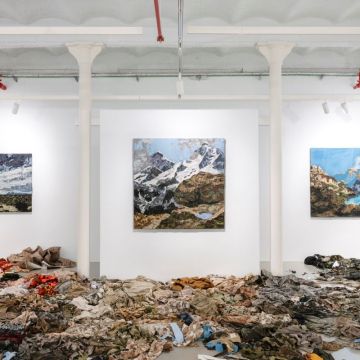
SOLAZ is an old word for comfort, pleasure or simply rest. It's also the title under which painter José María De Aurora (Santander, 1988) opens Escat Gallery's new space in L'Hospitalet de Llobregat. His painting is full of intense colours, shapes and contrasts that might at first seem far removed from any notion of calm. Yet it's precisely through this intensity of colour that the artist finds a way to pause, leave the outside noise behind and find a space of peace — a small solaz.

The exhibition also marks a new chapter for Escat Gallery, the gallery founded by Pau Escat and based at Carrer Trafalgar 47 (Barcelona), which is now expanding into L'Hospitalet de Llobregat with Escat Projects. The new space is conceived to broaden the gallery's activity beyond the conventional exhibition format and to foster research, artistic production and experimentation. The new premises will host art projects, installations, performances, publications and collaborative ventures, as well as work areas designed to encourage creation.
A conventional family, a fricandó and an omelette that upends everything
Until 18 October, at Teatre Poliorama
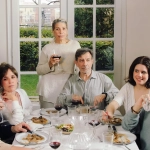
A village house, a birthday and a family meal that starts out entirely ordinary. In La truita, however, it takes just one of the daughters refusing the fricandó her mother has prepared with love and tenderness, and asking for an omelette instead, for the differences, reproaches and tensions the family has carried for years to slowly come to the surface.

A family made up of parents, both past sixty, who have left the city to start a new life in a village running an organic bakery; two daughters who are new mothers; and a middle daughter who plays the rebel, arriving at the meal with convictions that clash with everyone else's. She is lacto-pesco-vegetarian and has no intention of eating the veal her mother has cooked. A stellar cast, including Emma Vilarasau, Jordi Boixaderas, Sara Espígul and Júlia Bonjoch among others, stages the clashes between generations, convictions and ways of understanding life, which ultimately raise an uncomfortable question: which matters more, standing up for what we believe in, or not hurting the people we love?
The voices of the women who built the city
Until 13 September, at the Museu d'Història de Barcelona
"History is written by the victors." Although the authorship of this well-known saying is uncertain, it's a useful way into how we approach the story of the past, which has often reached us through the eyes of those who held power and were able to leave a record of it. The defeated, the conquered and all those left outside the spaces of power are also part of this story, even if their voices haven't always been recorded. Vindran les dones. 150 anys de lluites als carrers de Barcelona shines a light on some of these voices and reclaims the role of women in building the city.
The exhibition traces a journey from the working-class women and anarchists of the late nineteenth century to today's feminisms, taking in the struggles for education, political rights, bodily autonomy, housing and living conditions. It features both well-known and anonymous women — women who took to the streets, entered public life or turned literature and art into tools of resistance.
Eight pizzerias and a battle for the best pizza
10 to 13 September. Plaça Josep Tarradellas (Badalona)
What's the best pizza in Barcelona? The answer probably isn't simple. There are so many, and so different from one another, that deciding which deserves the title would mean trying them all and comparing them on equal terms. Pizzas Fest sets out to do exactly that: bringing together up to eight pizzerias in a single space so the public can taste them and decide who deserves to take the title. Each restaurant will present a classic pizza and a gourmet one, in a competition that will also have a professional jury.

After three editions held in Barcelona and more than 90,000 attendees, the festival is moving to Badalona for the first time to widen its culinary map. And between one pizza and the next, the festival also offers live music, DJs, workshops and showcookings.
Gràcia lets jazz be September's soundtrack
12 September to 17 October, at Plaça de la Vila de Gràcia
Gràcia and jazz have made a good pairing for years. And this September they meet again at Plaça de la Vila, one of the regular venues for L'Hora del Jazz — Memorial Tete Montoliu. Over three Sundays, the square will host six free concerts bringing together musicians from different generations and sensibilities within the Catalan jazz scene. The first of these concerts takes place on 13 September, with performances by Rai Castells Quintet and Marta Garrett Assanhado 4tet.
But jazz isn't only in tune with Gràcia — this year's 36th edition of L'Hora del Jazz will in fact travel beyond the city, with 17 concerts across Catalonia and the participation of 65 musicians.
Looking at the world from the other side of the camera
Until 20 September, at Foto Colectania
Infrastructure is part of our everyday lives, and yet we almost never notice it's there. The screens around us, the data we generate and the networks connecting cities all end up shaping how we live, forming part of a mechanism that often stays in the background. Photographer Max de Esteban starts precisely from this background of contemporary life in the exhibition Tantas historias. Tantas preguntas, on show at Foto Colectania until 20 September. More than fifty works spanning photographs, videos and installations attempt to make this less visible part of the world tangible, raising a more uncomfortable question: to what extent does everything we don't see end up shaping our lives?

This, however, isn't the only photographic take on the contemporary world that Foto Colectania is offering at the moment: this Thursday it opens the temporary exhibition Tomorrow Never Comes, Ed Templeton's first solo show in Spain. For ten days, the foundation moves photography to Espai Metrònom and turns its focus to another side of modern life — young people, skaters and suburbs are among the scenes that inspire Templeton.
From shop to shop until nightfall
12 September, 6pm to 11pm. Mercantic, in Sant Cugat del Vallès
Mercantic has become a go-to spot for lovers of antiques, decor and objects with history, where it's hard to find two identical pieces. Created in 1992 in the former ceramics factory founded by Josep Barnils in 1956, the space covers more than 15,000 m² and brings together over 100 traders and six restaurants, open every day from Tuesday to Sunday. On Sundays, the market also expands with more than 50 stalls selling bric-a-brac, secondhand goods and collectables, from 10am to 3pm.
To mark the return to routine after the summer break, Mercantic is putting on a special edition that will extend its usual hours well into the night. This Saturday 12 September, the shops, food spaces and grounds will stay open until 11pm, with music, activities and free entry.

The performing arts take over Tàrrega for four days
10 to 13 September, in Tàrrega (Urgell)
The performing arts rarely step outside the four walls of theatres, cultural centres and civic centres. But for four days, Tàrrega gives the arts a change of stage: the town's streets, squares and everyday spaces become makeshift venues for local and international theatre, circus and dance companies. This is the essence of FiraTàrrega, a professional fair that has established itself as one of the great showcases for the performing arts, not just in Catalonia but beyond.

This long weekend could be the perfect excuse to leave Barcelona and head to Tàrrega, which this year brings together up to 57 shows, 60% of them free and 35% world premieres.
Add The New Barcelona Post as your preferred Google source for free
Stay informed with the latest news.